Children in Mental Health Crisis Facing Days-Long A&E Waits Amid Growing Pressure on NHS Services
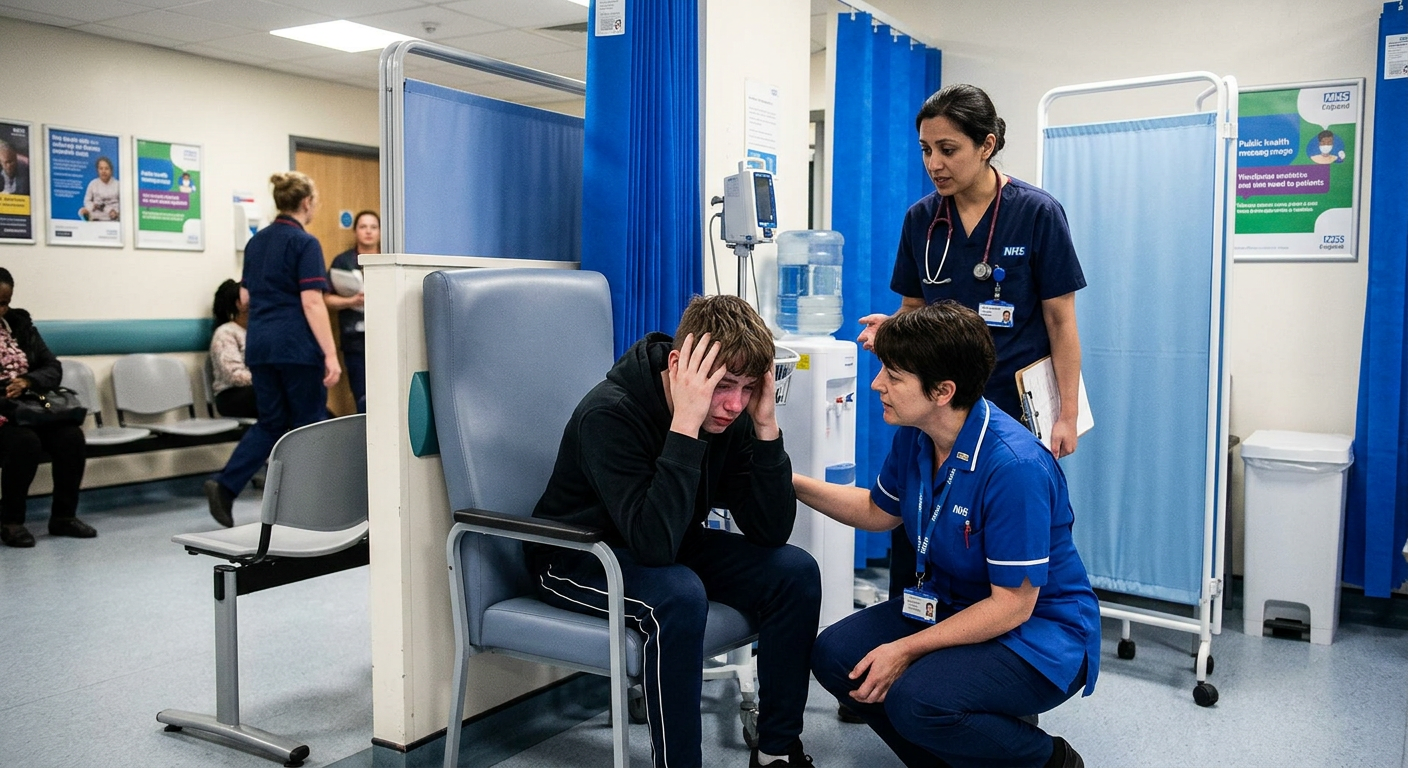
New figures have revealed the growing scale of the children’s mental health crisis across England, with some young people waiting up to three days in A&E departments before securing a specialist mental health bed.
The findings have sparked serious concern among healthcare leaders and nursing organisations, with experts warning that NHS emergency departments are becoming increasingly overwhelmed by rising demand for urgent mental health support for children and young people.
Data obtained from NHS trusts across England shows that the number of under-18s waiting more than 12 hours in A&E before being admitted to a specialist mental health unit has more than tripled since 2019.
Healthcare professionals working on the frontline have described the situation as “deeply distressing” for both patients and staff, warning that busy emergency departments are often inappropriate environments for vulnerable children experiencing severe mental health crises.
According to the figures, several NHS trusts reported cases where children and young people spent three days or longer waiting in emergency care for an available specialist bed.
Nurses working within A&E departments said such prolonged waits are becoming increasingly common, as hospitals struggle with shortages of mental health beds, growing demand for services and limited early intervention support across communities.
The Royal College of Nursing has described the situation as a “catastrophic system-wide failure”, warning that far too many children are reaching crisis point before receiving the care they need.
The organisation estimates that almost half a million children and young people have attended A&E departments in England seeking urgent mental health support since 2019.
Healthcare staff have also raised concerns about the emotional impact of prolonged emergency department stays, with some warning that the A&E environment can intensify trauma, distress and anxiety for vulnerable young patients.
Clinicians say the complexity and severity of mental health conditions among children and teenagers is increasing rapidly, with growing numbers of young people presenting with self-harm, eating disorders, severe anxiety and acute emotional distress.
Royal College of Paediatrics and Child Health representatives warned that mental health needs among children are becoming more severe and more complex than previously seen, placing additional strain on already pressured NHS services.
The crisis has renewed calls for faster rollout of dedicated mental health emergency units and expanded community-based support services, allowing young people to access specialist care away from busy emergency departments.
Healthcare leaders argue that earlier intervention, school-based mental health support and improved crisis care pathways are essential to reducing pressure on hospitals and preventing vulnerable children from reaching emergency point.
Meanwhile, NHS England said mental health services for children and young people have expanded significantly in recent years, with more young people accessing support compared with pre-pandemic levels.
An NHS spokesperson also highlighted the availability of 24/7 support through NHS 111 mental health services, alongside the continued rollout of mental health support teams within schools across England.
However, healthcare professionals continue to warn that demand is rising faster than capacity, leaving many children facing long waits for specialist mental health treatment at some of the most vulnerable moments of their lives.