NHS Expands AI-Powered Scanning Technology to Deliver One Million More Diagnostic Tests a Year
The NHS is accelerating its digital transformation with an expansion of advanced diagnostic technology, helping deliver approximately one million additional CT and MRI scans annually across England.
New government figures published on 3 November 2026 highlight how investment in medical equipment and artificial intelligence is helping increase diagnostic capacity, reduce waiting times and improve access to essential healthcare services.
Major Investment in Diagnostic Infrastructure
Since March 2024, the NHS has added 125 CT and MRI scanners, expanding its ability to diagnose cancer and other serious medical conditions.
Of these, 107 have been installed in community diagnostic centres, supporting the government’s ambition to provide more healthcare services closer to patients’ homes.
The expansion is helping healthcare providers respond to increasing demand while improving access to vital diagnostic services.
Artificial Intelligence Improving NHS Efficiency
Alongside new equipment, AI-powered MRI technology is transforming how existing scanners operate.
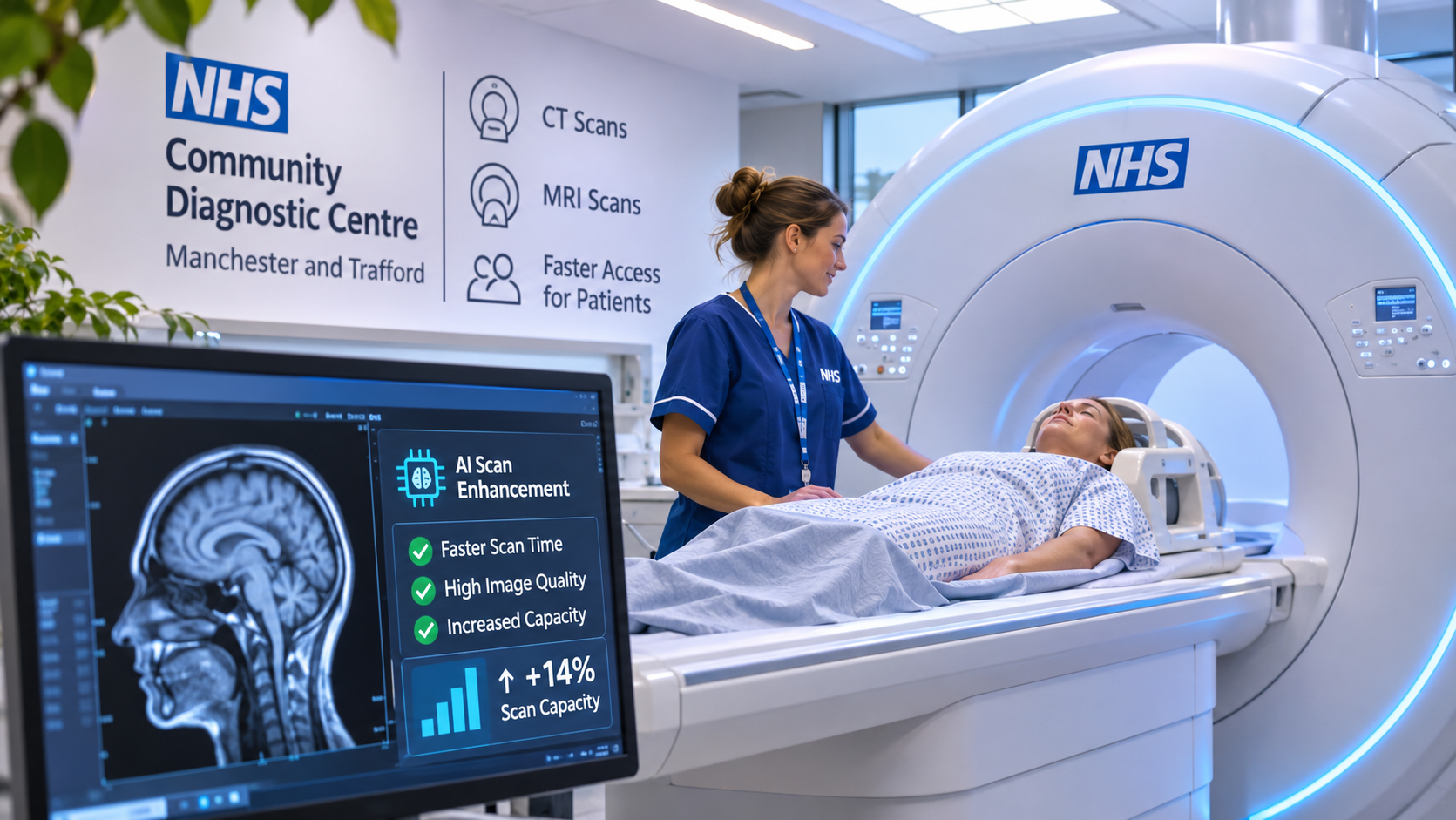
The technology accelerates image acquisition while maintaining diagnostic image quality, enabling NHS services to complete approximately 14% more scans on average.
AI acceleration software has already been installed in 54% of compatible NHS MRI scanners.
By reducing scanning times, hospitals can increase appointment capacity and make more efficient use of existing infrastructure.
Bringing Healthcare Closer to Communities
The recently opened £19.2 million Manchester and Trafford Community Diagnostic Centre demonstrates the NHS’s continued investment in modern, accessible healthcare facilities.
The centre aims to provide patients with faster and more convenient access to diagnostic services outside traditional hospital settings.
Looking ahead, NHS trusts will have opportunities to upgrade compatible MRI scanners by 2029, potentially creating thousands of additional appointments.
For healthcare leaders, the programme highlights how investment in digital innovation, infrastructure and service redesign can work together to improve operational efficiency and patient outcomes.