Welsh Healthcare Innovation Takes Major Step Towards Cutting Maternity Carbon Emissions Across the UK
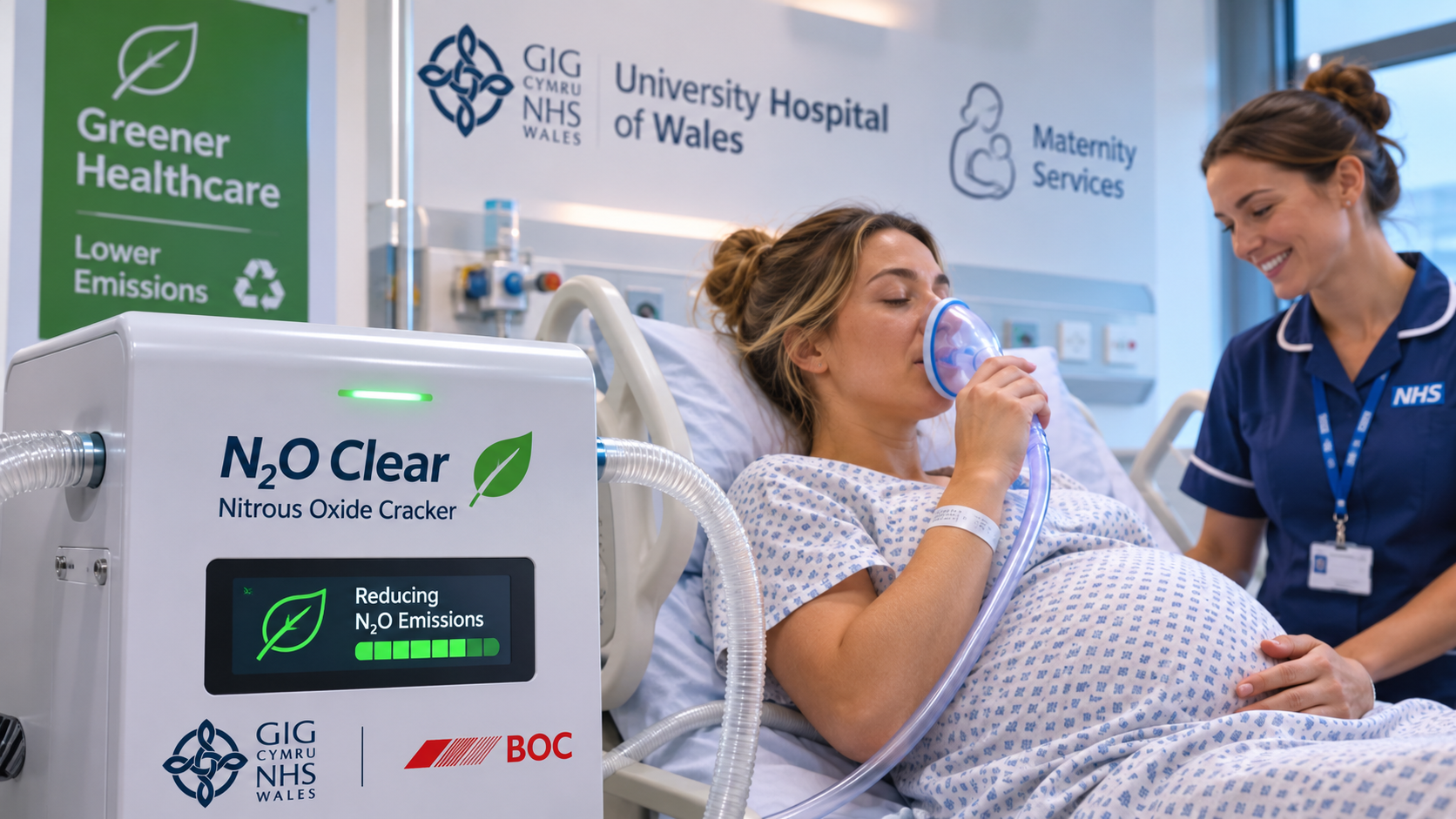
A pioneering environmental technology developed at the University Hospital of Wales is set to support greener maternity services across the UK and Ireland, demonstrating how NHS-led innovation can contribute to healthcare decarbonisation.
The N2O Clear system, also known as the Nitrous Oxide Cracker, has been developed to address the environmental impact of nitrous oxide released during maternity care.
Following collaboration between Cardiff and Vale University Health Board, the Welsh Government and technology company E-Breathe, the solution is now commercially available through medical gas supplier BOC.
Tackling Emissions in Maternity Services
Nitrous oxide is commonly used as part of Entonox, often referred to as gas and air, to provide pain relief during labour.
However, nitrous oxide is also a powerful greenhouse gas, creating an environmental challenge for healthcare organisations working towards net zero.
The N2O Clear technology has been designed to reduce emissions associated with exhaled nitrous oxide, helping maternity departments address their environmental footprint while maintaining access to established pain relief options.
From NHS Innovation to National Opportunity
The project originated from a clinical challenge identified by Consultant Anaesthetist Dr Charlotte Oliver and her team at the University Hospital of Wales.
Supported by innovation programmes including Contracts for Innovation Cymru, the concept progressed through development, testing and commercialisation.
The distribution agreement with BOC represents an important milestone, making the technology accessible to healthcare providers across the UK and Ireland.
Accelerating Sustainable Healthcare Innovation
The project demonstrates how collaboration between frontline NHS professionals, government organisations and commercial partners can help translate clinical challenges into practical environmental solutions.
As healthcare organisations face increasing pressure to reduce emissions, innovations targeting specific clinical processes could become an important component of wider sustainability strategies.
For NHS sustainability and procurement leaders, the technology offers an example of how targeted investment in medical innovation can support greener healthcare delivery.