Smart Oxygen Masks Could Transform Patient Safety as NHS Launches Innovative Monitoring Trial
A pioneering respiratory monitoring technology is entering clinical trials at University College London Hospitals (UCLH), offering the potential to transform how healthcare professionals identify patients at risk of deterioration.
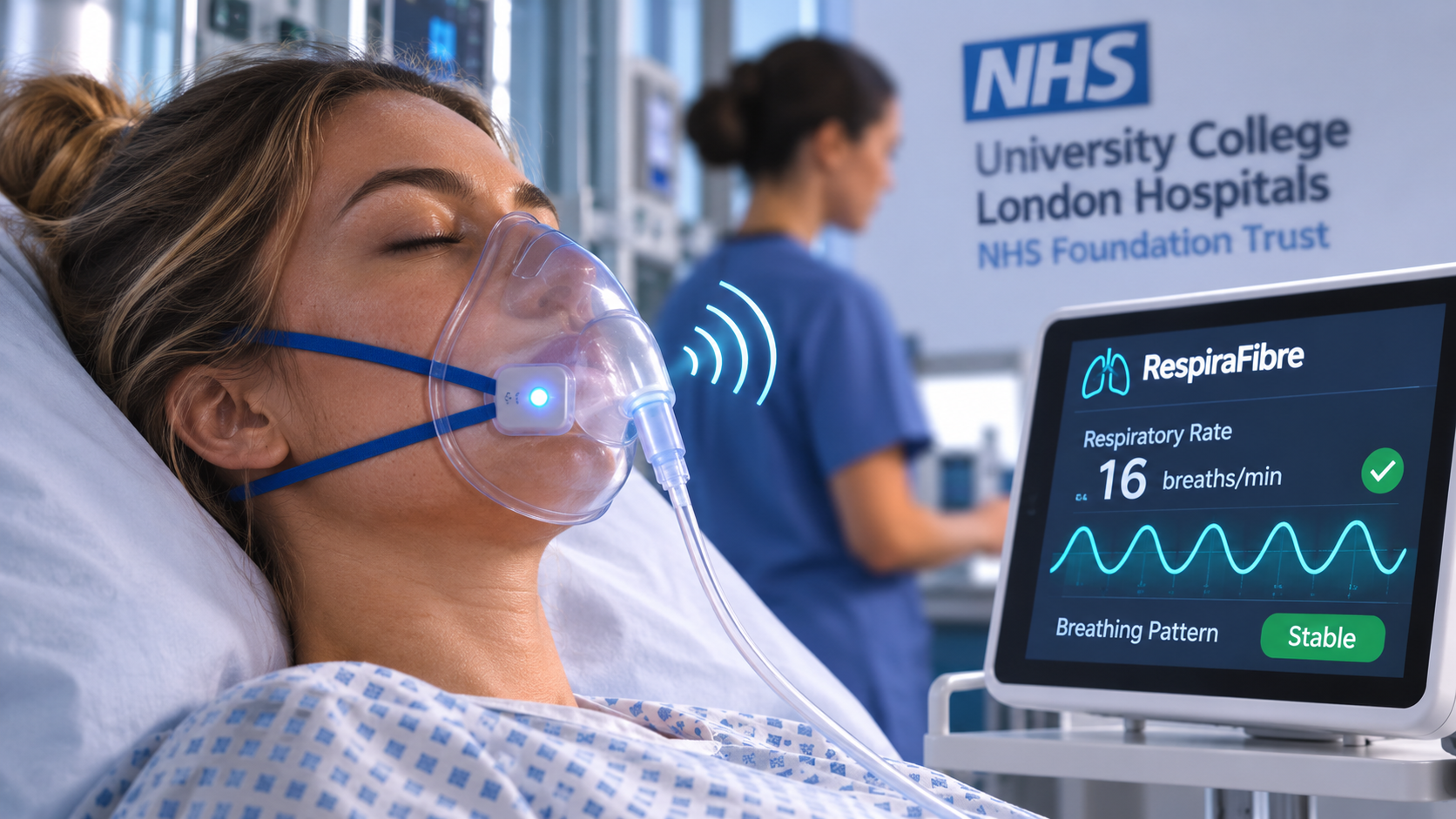
The innovative RespiraFibre system uses advanced nanotechnology to continuously monitor breathing patterns, providing clinicians with real-time information that could support earlier intervention and improved patient safety.
Transforming Everyday Medical Equipment
Developed through collaboration between UCLH clinicians, University College London engineers and technology specialists, RespiraFibre integrates an ultra-sensitive sensor into oxygen masks and nasal cannulae.
Rather than requiring patients to wear additional monitoring equipment, the technology transforms existing oxygen delivery devices into intelligent monitoring systems.
The embedded sensor detects subtle changes associated with breathing, continuously measuring respiratory rate and patterns.
Information is transmitted wirelessly to a digital platform, allowing clinical teams to monitor trends and potentially identify signs of deterioration earlier.
Improving Patient Experience Through Innovation
Traditional respiratory monitoring methods can sometimes be uncomfortable or disruptive, particularly for patients requiring continuous observation.
By integrating monitoring technology into equipment patients already use, RespiraFibre aims to offer a more comfortable alternative while supporting clinical decision-making.
The technology has already received recognition at the 2026 Medipex NHS Innovation Awards for its potential contribution to diagnosis and screening.
The newly launched ROBUST clinical study will now evaluate its performance in patients.
The Future of Intelligent Healthcare
The trial represents a wider shift towards connected medical devices and continuous digital monitoring within NHS hospitals.
For healthcare leaders, technologies capable of improving clinical visibility without significantly increasing staff workloads could become increasingly valuable.
Although further clinical evaluation is required, RespiraFibre highlights the potential for relatively small technological developments to deliver meaningful improvements in hospital care.